

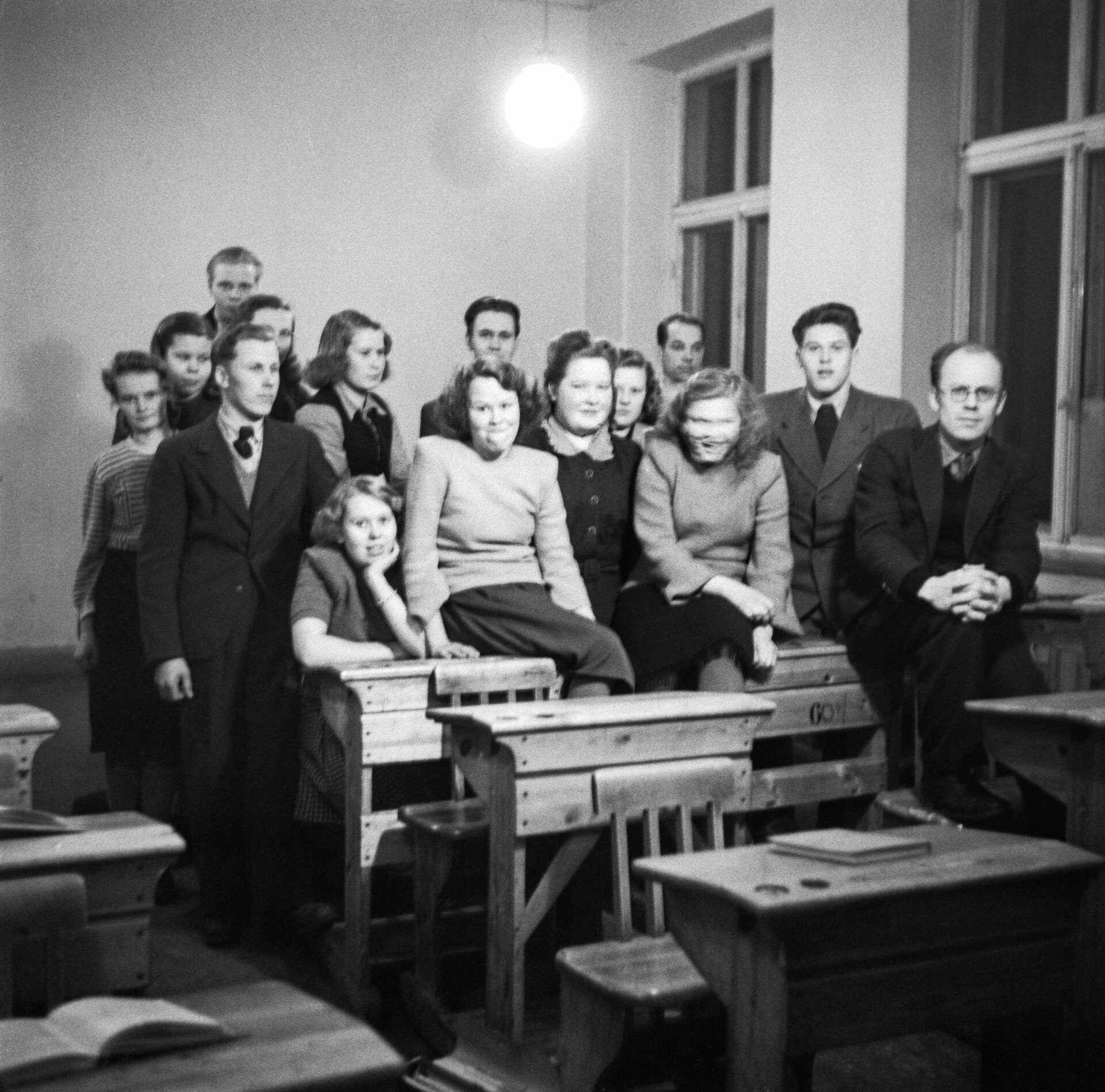
Finland’s schools have long been the world’s favourite education story: trusted teachers, light testing, strong results and children who seem, by international standards, remarkably unpressured. Now Finland’s schools face a new kind of test, not from an inspector but from changing childhoods: falling reading scores, smartphones in every pocket and the question of whether a system built on trust can adapt without losing what made it work.
The warning signs are real, though easily exaggerated. Finland still performs well in international comparisons, but its scores in reading and mathematics have been drifting down for years, as they have in many wealthy countries. The gap between the strongest and weakest readers has widened. Teachers describe shorter attention, less reading for pleasure and the constant competition of the phone, themes our daily digest has followed through successive terms of debate.
Phones, reading and the attention question
Finland has joined the international turn against the smartphone in school. New national rules restrict phone use during the school day, giving teachers legal backing that many say they previously lacked. The policy is popular with parents and, tellingly, with many older pupils. Yet Finnish educators are quick to say phones are a symptom as much as a cause. The deeper issue is the collapse of long-form reading at home, in Finland as elsewhere, and schools cannot assign their way out of a culture.
The response is characteristically practical. School libraries are being restocked and librarians revalued. Reading is timetabled, not just encouraged. Teachers are trained to teach digital literacy critically, treating the phone as material to understand rather than merely a distraction to ban. International research summarised by the World Economic Forum on attention and learning has been widely debated in Finnish staffrooms, less for its conclusions than for its reminder that every country is running the same experiment.
Trust under pressure
The harder test is philosophical. Finland’s system rests on teacher professionalism: master’s-level training, no inspectorate grading schools and no standardised testing until the final school-leaving examination. As results dip, pressure grows for more measurement, more national direction, more of what Finland deliberately avoided. Many Finnish educators resist, arguing that the dip began during an era of reforms and economic cuts, and that doubling down on trust, with better support for struggling schools, is the Finnish way back.
Inequality is where the argument concentrates. Outcomes now differ more by family background and by municipality than they used to, and a system that prides itself on equity cannot accept that as background noise. Extra funding for schools in demanding areas, smaller groups for early reading and investment in special education are the policies being tested. Immigration adds a further task: integrating children learning Finnish as a second language into a system designed for a more homogeneous country.
A test the system sets itself
What distinguishes the Finnish debate is its tone. There is concern, but little panic, and a striking willingness to argue from evidence rather than nostalgia. Universities are studying the reforms as they happen. Teachers’ organisations publish their own data. The country that taught the world to trust teachers is now asking what trust requires in return: candour about results, and the courage to change methods while defending principles.
Vocational education is part of the same reckoning. Finland is working to raise the standing of its vocational routes, ensuring that pupils who leave the academic track still gain strong literacy, mathematics and digital skills. Employers report that the modern economy needs both, and that the old hierarchy of routes helps nobody. Early results from schools piloting closer cooperation between academic and vocational teachers are promising enough to have entered the national debate, which in Finland is usually enough to guarantee a careful trial and an honest published evaluation.
Finland will not solve the global problem of childhood and the smartphone. But its schools are a useful place to watch the attempt, because the experiment is honest. If a trusted, well-trained profession, given time and resources, can restore reading and narrow gaps, that is evidence for everyone. If it cannot, that is evidence too, and Finland, characteristically, will publish it.